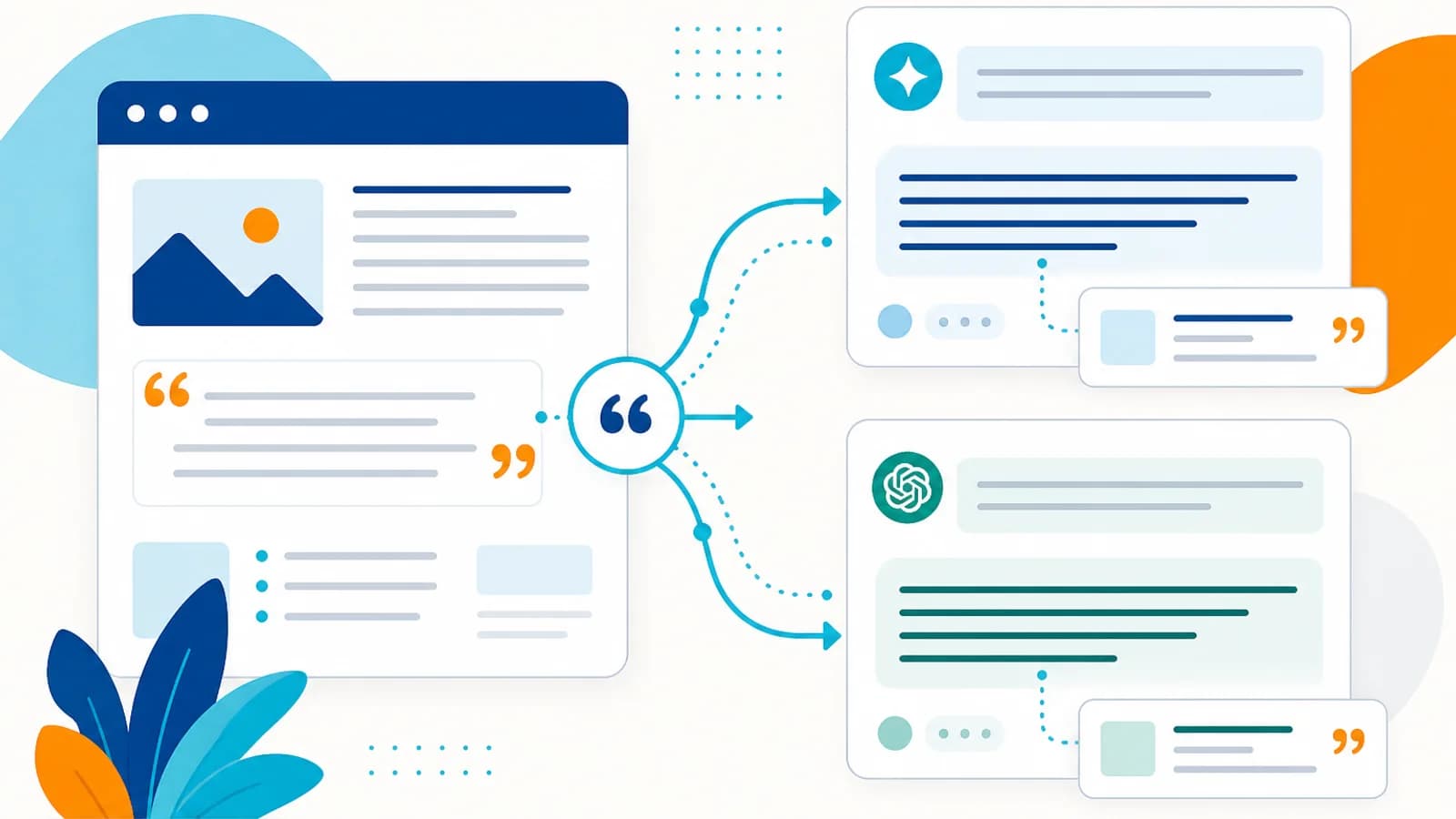

Quick Take
- SEO is evolving from rankings and clicks to AI visibility, citations, and becoming a trusted answer
- Learn how AI search, GEO, and intent-led content change SEO in 2026
What You'll Learn
In this article you'll learn:
- What Is AI Search?
- SEO Is Moving From Rankings to Visibility
- The Rise of Zero-Click Search
- SEO Is Becoming More About Intent
- From Keywords to Topics and Entities
- What Is GEO?
How This Works
Search visibility depends on clear content, technical foundations, and authority signals that help engines understand and recommend your pages.
How search visibility works
- Step 1: Content
- Step 2: Structure + intent
- Step 3: Crawl + index
- Step 4: Rank + cite
- Step 5: Qualified traffic
- Step 6: Business outcome
Need help improving digital visibility?
Improve Your Digital Visibility →SEO is changing. For more than two decades, the primary objective of search engine optimization was relatively straightforward: create content → optimize for keywords → build authority → rank on Google → get clicks. That model is still relevant. But search behavior is evolving rapidly.
People are increasingly asking questions directly to AI-powered search experiences and expecting a complete answer instead of a list of ten blue links. Google is incorporating AI into search. ChatGPT, Microsoft Copilot, Perplexity, Gemini, and other AI-powered platforms are becoming part of the information discovery journey.
This creates a new challenge for businesses: How do you optimize your content when the user may never click a traditional search result? Welcome to the next phase of SEO—AI Search.
What Is AI Search?#
Traditional search primarily matches a user’s query with indexed web pages and ranks those pages based on relevance, authority, quality, and many other signals. AI search changes the experience.
Instead of simply returning links, an AI-powered search system can understand the intent behind a question, combine information from multiple sources, summarize information, compare different options, answer follow-up questions, maintain conversational context, recommend solutions, provide citations or source references, and generate a response tailored to the user’s situation.
For example, instead of searching “Best CRM software,” a user might ask: “I’m running a 20-person B2B company. Which CRM should I choose if I need lead automation, WhatsApp integration, AI features, and a budget under ₹50,000 per month?” This is no longer simply a keyword query. It is a decision-making query—and AI search is designed to handle exactly this type of interaction.
SEO Is Moving From Rankings to Visibility#
Traditional SEO has traditionally focused on: Where does my website rank? AI search introduces a different question: Does the AI system mention or cite my business when someone asks a relevant question?
Consider two businesses. Business A ranks #3 for “AI CRM.” Business B doesn’t always rank #1, but is repeatedly referenced by AI systems when users ask: “What is the best AI CRM for a growing B2B company?” Business B may receive fewer traditional search impressions but could still gain significant visibility among high-intent users.
This creates a new SEO objective: become a trusted source that AI systems can understand, retrieve, and reference. This doesn’t mean traditional rankings no longer matter. It means visibility is becoming multi-dimensional.
The Rise of Zero-Click Search#
One of the biggest changes businesses need to understand is the growth of zero-click experiences. A user searches for something. The search engine provides the answer. The user doesn’t need to visit another website.
This can happen through AI-generated answers, featured snippets, knowledge panels, direct answers, maps, shopping results, and other search features. AI makes this behavior even more powerful.
A user can ask: “What is the difference between AI agents and traditional automation?” Instead of clicking through five articles, an AI system can explain the difference immediately. This creates a major challenge for publishers and businesses: If users don’t click, how do you benefit from search visibility?
The answer is changing from simply traffic to a broader concept of brand visibility, authority, citations, and qualified demand.
SEO Is Becoming More About Intent#
Keyword optimization is still important. But keyword matching alone is becoming less sufficient. Consider the query “CRM.” It provides very little information about the user’s intention. They could be looking for a CRM definition, software, pricing, implementation, comparison, development, or alternatives.
Now compare that with: “How can a 50-person sales team automate lead qualification using AI?” The second query contains significantly more context. AI search systems are designed to understand this context.
Therefore, content should increasingly be built around search intent and real questions, rather than simply repeating a target keyword.
From Keywords to Topics and Entities#
Traditional SEO often starts with Keyword → Article. Modern SEO increasingly starts with Topic → Entity → Intent → Question → Comprehensive Answer.
For example, instead of creating ten separate articles targeting AI CRM, AI CRM software, AI-powered CRM, CRM with AI, AI sales CRM, and intelligent CRM, a business can create a strong topic cluster around AI-Powered CRM.
Then cover what AI-powered CRM is, AI CRM vs traditional CRM, benefits, use cases, architecture, implementation, security, pricing, AI CRM for small businesses and enterprises, automation, and AI CRM agents. This creates stronger topical depth.
What Is GEO?#
You may have heard another term appearing alongside SEO: GEO — Generative Engine Optimization. GEO generally refers to optimizing content so that it has a better chance of being surfaced, represented, or cited in generative AI experiences.
The terminology is still evolving, and there is no single universally accepted GEO playbook. But the underlying objective is straightforward: make your content easy for AI systems to understand, trust, retrieve, and reference.
This overlaps significantly with good SEO. High-quality content, clear structure, authority, relevant entities, and useful information remain important. The difference is that the optimization target is expanding beyond traditional search rankings.
What Makes Content More AI-Friendly?#
There is no guaranteed formula for getting cited by an AI system. However, businesses can improve the usefulness and retrievability of their content by following several principles.
1. Answer Questions Directly#
Don’t hide the answer behind five paragraphs of introduction. If the question is “What is an AI agent?” start with a clear definition—then explain it. AI systems and humans both benefit from clear answers.
2. Build Comprehensive Content#
AI systems often need enough context to understand a topic. Instead of creating thin pages targeting individual keywords, build useful resources that cover the subject properly.
For example, an AI Agents resource could include definition, how they work, architecture, use cases, benefits, limitations, security, cost, AI agents vs automation, implementation strategy, and examples. The goal isn’t simply to make an article longer. The goal is to make it more complete and useful.
3. Use Clear Structure#
AI-friendly content is generally easier to understand when it has clear organization. Use descriptive headings, short paragraphs, bullet points, tables, definitions, examples, step-by-step processes, FAQs, and clear conclusions.
A well-structured article is easier for both users and machines to process.
4. Write for Questions, Not Just Keywords#
Instead of thinking “I need to rank for AI CRM,” think: “What questions does someone considering an AI CRM actually have?”
For example: What is an AI CRM? How is AI CRM different from traditional CRM? Is AI CRM suitable for small businesses? Can AI CRM automate lead qualification? Can AI CRM integrate with WhatsApp? How much does AI CRM cost? Is AI CRM secure? How do I migrate from an existing CRM? These questions create much stronger content opportunities.
5. Demonstrate First-Hand Knowledge#
Generic AI-generated content is becoming increasingly easy to produce. That means simply publishing thousands of words isn’t a sustainable competitive advantage. Businesses need to demonstrate real expertise.
Include original research, case studies, real examples, data, screenshots where appropriate, implementation lessons, expert opinions, technical explanations, original frameworks, and actual customer problems. The more useful and original the content is, the harder it is to replace with generic content.
6. Build Topical Authority#
One article rarely establishes expertise. Imagine your company wants to be known for AI Automation for Businesses. Instead of publishing one article, build a content ecosystem.
Start with a pillar such as “AI Automation for Businesses: Complete Guide,” then support it with articles on AI Agents vs Traditional Automation, AI-Powered CRM, AI Customer Support, AI Lead Generation, AI Workflow Automation, AI Agents for Sales and Marketing, AI Automation ROI, security, and implementation.
These articles can connect to one another. This creates a stronger topical structure.
7. Make Your Business Easy to Understand#
This is especially important for AI search. Suppose your website says: “We create innovative digital transformation experiences.” That sounds professional but doesn’t clearly explain what the company does.
Compare it with: “We build AI-powered CRM, business automation, SaaS platforms, and custom enterprise applications for growing businesses.” The second statement is much clearer.
Your website should clearly communicate who you are, what you do, who you serve, and what problems you solve. This helps users and search systems understand your business.
8. Strengthen Your Brand and Entity Signals#
Search is increasingly becoming entity-oriented. Businesses should ensure that important information is consistent across the web—company name, website, about page, services, leadership, locations, social profiles, business descriptions, author profiles, and industry expertise.
Consistency matters. A strong digital presence isn’t just about backlinks. It’s about creating a recognizable and trustworthy entity.
The Importance of Structured Data#
Structured data can help search engines understand what a page represents. Depending on the content, websites may use structured data for organization, article, product, service, FAQ, breadcrumbs, person, local business, and reviews.
Structured data doesn’t guarantee an AI citation or higher ranking. But it can help machines interpret page information more clearly. The principle is simple: don’t just publish information—make the meaning of that information clear.
Internal Linking Is Becoming More Important#
AI search doesn’t eliminate the importance of your website architecture. A strong internal linking structure helps connect related information.
For example: AI Automation → AI Agents → AI CRM → AI Sales Automation → AI Customer Support → AI Workflow Automation. Each page provides context to the others. This creates a connected knowledge ecosystem rather than isolated blog posts.
Backlinks Still Matter#
AI search doesn’t mean backlinks suddenly become irrelevant. Authority signals still matter. A website referenced by reputable publications, organizations, experts, and other authoritative sources can establish stronger credibility.
But the strategy should not be “get as many backlinks as possible.” Instead, earn relevant, authoritative references. A single highly relevant industry reference can be more valuable than dozens of low-quality links.
Reviews, Communities and Third-Party Sources Matter Too#
Search visibility isn’t limited to your own website. AI systems may encounter information about your company through industry publications, review platforms, business directories, forums, social platforms, news websites, professional communities, and partner websites.
This means businesses need to think beyond on-page SEO. Your entire digital footprint contributes to how the market perceives your brand.
AI Search Changes Content Strategy#
Traditional content strategy often looks like: Keyword research → Article → Optimize → Publish → Backlinks. A modern strategy can look more like: Audience problem → Search intent → Topic research → Entity and competitor analysis → Comprehensive content → Original expertise → Internal linking → Structured data → Distribution → Brand mentions → Performance measurement.
The content is no longer created only to rank. It is created to become a useful information source.
AI Search Is Also Changing Conversion Strategy#
Here’s an important point. A user may discover your company through AI search without immediately clicking your website. Later, they may search your company name directly, visit your website, search for your product, or ask another AI system about your company.
Therefore, businesses should track more than organic sessions. Consider measuring brand searches, direct traffic, organic conversions, assisted conversions, qualified leads, branded queries, referral traffic, mentions, citations where measurable, and sales pipeline influenced by organic discovery.
SEO is increasingly becoming part of the entire customer acquisition journey.
The Rise of “Best For Me” Searches#
One of the most important changes in search behavior is the move from “What is X?” toward “Which X is best for my situation?” Examples include best CRM for a small B2B business, best AI automation platform for a real estate company, best e-commerce platform for a growing Indian brand, and best AI tools for an education consultancy.
These are high-intent queries. Businesses should create content that helps users make decisions. Comparison content becomes particularly valuable—X vs Y, traditional CRM vs AI CRM, AI agents vs automation, Shopify vs WooCommerce, custom software vs SaaS, in-house development vs outsourcing.
The objective should not be to manipulate rankings. It should be to genuinely help someone make a better decision.
What About AI-Generated Content?#
AI can be an excellent content creation assistant. But there is a major difference between AI-assisted content and mass-produced generic content.
AI can help with research organization, outlines, content ideation, first drafts, summaries, content repurposing, SEO analysis, and editing. But businesses should add human value through experience, examples, original insights, data, opinions, case studies, and expert review.
The goal shouldn’t be “How many articles can AI generate?” The better question is: How much useful information can we create with AI while maintaining genuine expertise and quality?
How Businesses Should Adapt Their SEO Strategy in 2026#
A practical AI-search strategy can be built around seven areas: create topic clusters; answer real customer questions; add original expertise; improve website architecture; strengthen entity signals; build authority; and measure business outcomes.
Don’t optimize only for rankings. Measure whether search visibility creates traffic → leads → opportunities → revenue.
A Simple AI SEO Framework#
Discover: identify what your customers are asking. Understand: map search intent, entities, topics, and decision stages. Create: produce comprehensive, original, useful content. Connect: build internal links and topic clusters.
Establish: strengthen authority, expertise, brand, and entity signals. Distribute: promote content across relevant channels. Measure: track visibility, engagement, leads, and revenue. Improve: update content as search behavior and information change.
What SEO Will Look Like After 2026#
The future of SEO probably won’t have a single search engine. Users will discover information through a combination of traditional search, AI assistants, AI search engines, social platforms, communities, video, voice interfaces, recommendations, and brand ecosystems.
That means SEO is gradually becoming broader than Search Engine Optimization. It is increasingly about being discoverable wherever people go to find answers. Your website remains important—but it is only one part of your digital presence.
Final Thoughts#
AI search isn’t killing SEO. It is changing what SEO means. The old objective was: Rank higher. The new objective is closer to: Become the trusted answer.
That requires more than keywords. It requires strong content, clear answers, real expertise, topical authority, technical SEO, structured information, strong brand signals, relevant external references, consistent publishing, and genuine usefulness.
Businesses that continue producing thin, keyword-focused content may find it increasingly difficult to compete. Businesses that build deep expertise around the problems their customers actually have will have a much stronger foundation.
The future belongs to businesses that don’t simply ask “How do we rank on Google?” But instead ask: “When our customers ask an AI system a question about our industry, why should our company be part of the answer?” That is the real SEO challenge for 2026—and it is also the opportunity.
How This Benefits an Organization
This is especially important for AI search. Suppose your website says: “We create innovative digital transformation experiences.” That sounds professional but doesn’t clearly explain what the company does.
- More qualified discovery
- Stronger content structure
- Better crawlability
- Improved trust signals