Quick Take
- how to make your website useful
- trustworthy
- easy for ChatGPT
- Google AI to discover and cite
What You'll Learn
In this article you'll learn:
- What Does It Mean to Be Cited by AI?
- ChatGPT, Gemini and Google AI Are Not Exactly the Same
- The First Principle: Create Something Worth Citing
- What About ChatGPT Specifically?
- What About Gemini?
- What About Google AI Search?
How This Works
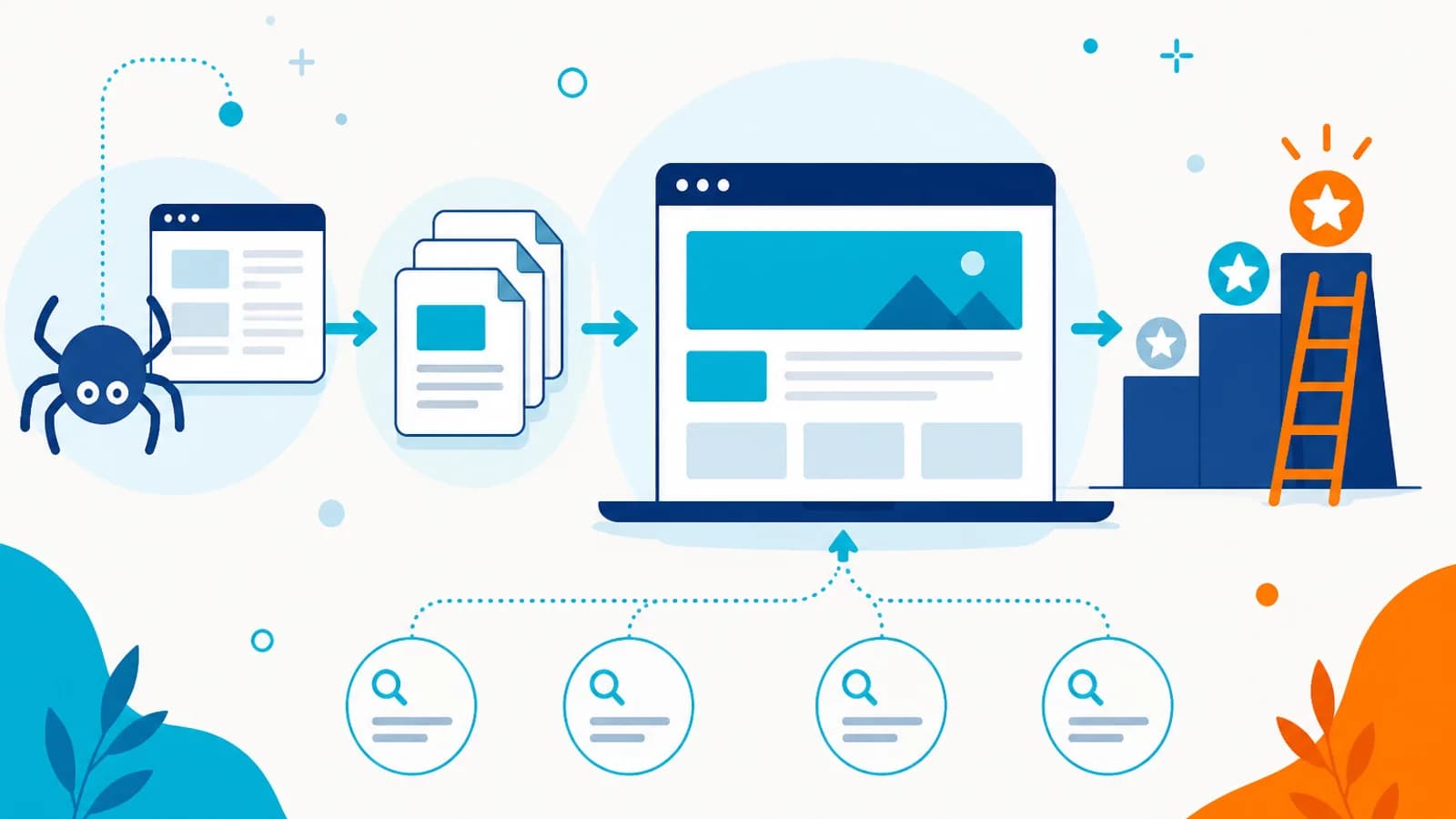
Search visibility depends on clear content, technical foundations, and authority signals that help engines understand and recommend your pages.
How search visibility works
- Step 1: Content
- Step 2: Structure + intent
- Step 3: Crawl + index
- Step 4: Rank + cite
- Step 5: Qualified traffic
- Step 6: Business outcome
Need help improving digital visibility?
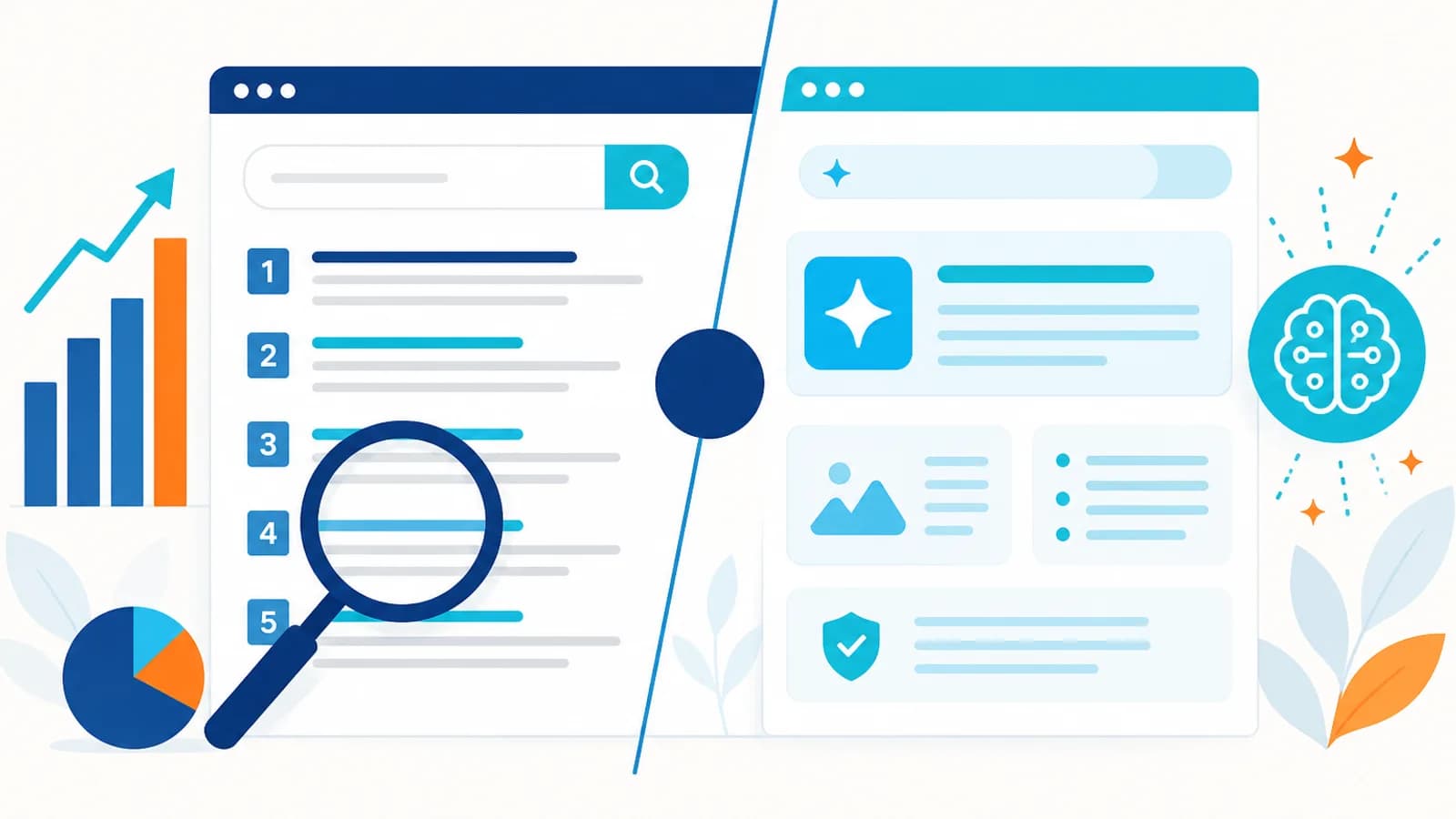
Improve Your Digital Visibility →For years, businesses competed for a position on Google’s first page. The objective was simple: rank higher → get clicks → generate traffic → convert visitors into customers. But search is changing.
People are increasingly using AI-powered experiences to research products, compare businesses, understand complex topics, and make purchasing decisions. Instead of searching “Best CRM software for small business,” a potential customer may ask an AI system: “What are the best CRM options for a 20-person B2B company that needs lead automation and WhatsApp integration?” The answer may contain several recommendations and references to websites.
This creates a new opportunity for businesses: How do you make your website more likely to be discovered, understood, and cited by AI-powered search experiences? There is no guaranteed formula for getting cited by ChatGPT, Gemini, or Google’s AI features. However, businesses can significantly improve their chances by building content and digital signals that are useful, trustworthy, understandable, authoritative, and easy for search systems to discover and interpret. This guide explains how.
What Does It Mean to Be Cited by AI?#
A traditional search engine typically provides a list of results. An AI-powered search experience may instead understand the user’s question, retrieve information from multiple sources, compare the information, generate a response, and reference or cite some of those sources.
For example, someone could ask: “What is the difference between AI agents and traditional automation?” An AI-generated response may explain the concept and reference several websites that provide supporting information. If your website is one of those sources, you have gained AI-search visibility.
This is different from a traditional ranking. You aren’t necessarily competing only for Position #1, #2, or #3. You’re competing to become a credible source of information that an AI system can use when constructing an answer.
ChatGPT, Gemini and Google AI Are Not Exactly the Same#
It’s important not to treat every AI system as one search engine. Different platforms have different systems, models, retrieval mechanisms, indexes, partnerships, and ranking signals.
For example: ChatGPT can use web-connected search experiences and other information sources. Google combines its traditional search infrastructure with AI-powered search features. Gemini operates within Google’s broader AI ecosystem and can access information through Google’s services and search capabilities.
Because these systems change frequently, businesses should avoid strategies based on claims such as “Do X and ChatGPT will always cite your website.” No legitimate SEO strategy can guarantee that. The better strategy is to build a website that is high-quality and discoverable across search and AI ecosystems.
The First Principle: Create Something Worth Citing#
This sounds obvious. But it is probably the most important principle. If your website contains the same generic information as hundreds of other websites, there is little reason for an AI system—or a human—to prefer it.
Consider two articles. Article A: “AI agents are software systems that use artificial intelligence to perform tasks.” Correct—but generic. Article B: “AI agents combine reasoning, tools, business rules, APIs, and contextual information to complete multi-step tasks. For example, a sales agent can qualify a lead, retrieve CRM information, draft a personalized response, update the opportunity, and schedule a follow-up.” The second explanation provides more context and practical value.
The objective should be: Don’t create content merely to be indexed. Create content that deserves to be referenced.
1. Answer the Question Immediately#
One of the simplest improvements you can make is to answer questions directly. If your article is about “What is an AI-powered CRM?” don’t spend the first 500 words talking about the history of CRM. Start with the answer.
For example: An AI-powered CRM combines traditional customer relationship management with AI capabilities that can analyze customer data, understand interactions, recommend next actions, automate repetitive tasks, and assist employees with sales and customer service activities. Then expand on the subject.
This benefits readers, search engines, AI systems, featured snippets, and voice assistants. Clear answers create strong information signals.
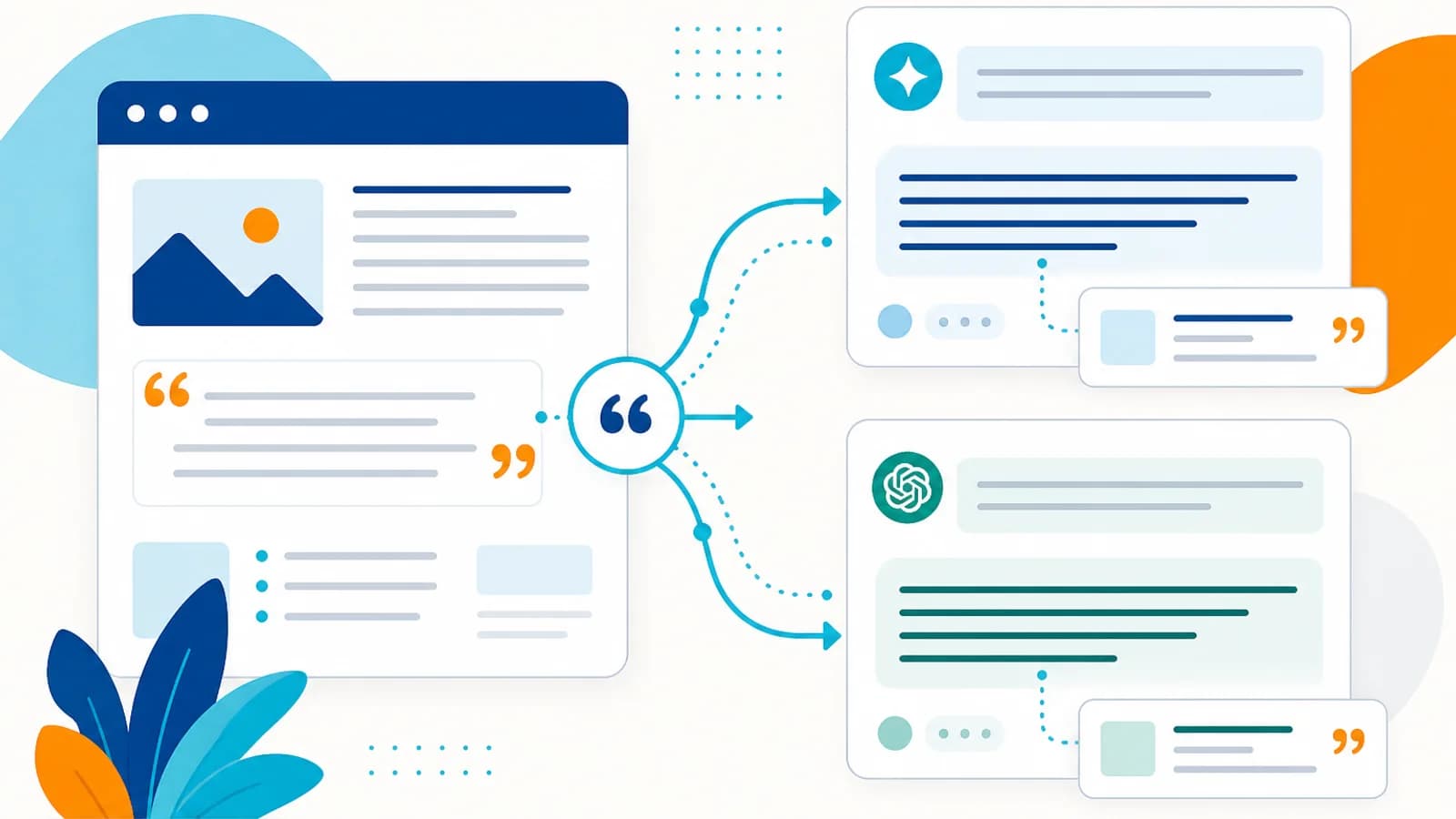
AI systems cite content that is clear, structured, authoritative, and easy to retrieve — not pages optimized only for keywords.
AI citation flow
- Step 1: Clear answer
- Step 2: Structured content
- Step 3: Authority signals
- Step 4: Crawlable pages
- Step 5: AI citation
- Step 6: Qualified traffic
2. Structure Your Content Around Questions#
People don’t always search using short keywords anymore. They ask complete questions. Instead of targeting only “AI CRM,” build content around questions such as: What is an AI CRM? How does an AI CRM work? How is AI CRM different from traditional CRM? Can AI CRM qualify leads? Can AI CRM automate follow-ups? How much does AI CRM cost? Is AI CRM suitable for small businesses? How do AI CRM agents work? How can AI CRM integrate with WhatsApp?
This creates a much stronger content structure. A good rule is: Every major section should answer a real question or solve a real problem.
AI systems cite content that is clear, structured, authoritative, and easy to retrieve — not pages optimized only for keywords.
AI citation flow
- Step 1: Clear answer
- Step 2: Structured content
- Step 3: Authority signals
- Step 4: Crawlable pages
- Step 5: AI citation
- Step 6: Qualified traffic
3. Build Topic Authority#
One article is rarely enough to establish strong expertise. Suppose your company wants to become known for AI Business Automation. Don’t publish only “What is AI automation?” Create a complete knowledge ecosystem.
Start with a pillar article such as “AI Business Automation: Complete Guide,” then support it with content on AI Agents vs Traditional Automation, AI-Powered CRM, AI Customer Support, AI Sales Automation, AI Marketing Automation, AI Workflow Automation, AI Agent Architecture, AI Automation Security, AI Automation ROI, and an AI Agent Implementation Guide. Then connect these articles using internal links. This creates topical depth.
4. Make Your Website Easy to Understand#
AI systems need to understand what your website is about. Don’t make your business description vague. For example: “We deliver next-generation digital transformation solutions.” This doesn’t tell much.
A clearer version could be: “We build AI-powered CRM systems, business automation solutions, SaaS platforms, e-commerce applications, and custom enterprise software.” Now the business identity is much clearer.
Your website should clearly communicate who you are, what you do, who you serve, what problems you solve, where you operate, and why customers should trust you.
5. Create Dedicated Service Pages#
Don’t expect a single homepage to rank or become relevant for every service you provide. If you offer AI development, CRM development, SaaS development, e-commerce development, business automation, and custom software development, create dedicated pages for those services.
Each page should explain what the service is, who needs it, problems it solves, how it works, features, integrations, security, implementation, examples, FAQs, and expected outcomes. This creates a clearer semantic relationship between your business and the services you provide.
6. Use Real Examples#
Generic statements are easy to produce. Real examples are more valuable. Instead of “AI can improve sales productivity,” explain how.
For example: A sales team receives 300 leads every month. An AI workflow can capture the leads, enrich available information, classify them, identify high-priority prospects, update the CRM, and prepare personalized follow-ups. Sales representatives can then focus on qualified opportunities rather than manually reviewing every lead. Examples provide context—and they also demonstrate expertise.
7. Publish Original Data#
One of the strongest ways to create content worth referencing is to publish information that others don’t have. Examples include original research, industry surveys, benchmark reports, performance data, case studies, experiments, customer insights, internal analysis, and technical benchmarks.
For example: “We analyzed 10,000 customer support conversations and found that 42% of repetitive tickets were related to…” That is significantly more valuable than another generic article saying “AI can automate customer support.” Original data gives other websites a reason to reference your work.
8. Build Strong Author Profiles#
Who wrote the content matters. A detailed author profile can help demonstrate expertise. Include relevant information such as name, professional role, experience, industry expertise, qualifications, areas of specialization, professional profiles, and published work.
For technical content, an article written and reviewed by someone with genuine engineering experience is more credible than anonymous generic content. The goal is to demonstrate: There is a knowledgeable person behind this information.
9. Demonstrate First-Hand Experience#
AI can generate generic explanations very easily. Therefore, businesses should add information that reflects real experience. Instead of “Microservices improve scalability,” write: “In a high-traffic SaaS application, we separated authentication, billing, notifications, and reporting into independently scalable services because these workloads had significantly different scaling requirements.”
Useful first-hand content can include what you implemented, what went wrong, what you changed, why you selected a technology, performance improvements, lessons learned, trade-offs, and architecture decisions. This is difficult to reproduce with generic content.
10. Create Comparison Content#
AI search is particularly useful for decision-making. Users increasingly ask “Which is better?”, “What should I choose?”, and “What’s the difference?” Create content around these decisions.
Examples include AI Agents vs Traditional Automation, AI CRM vs Traditional CRM, Custom CRM vs SaaS CRM, Shopify vs WooCommerce, React vs Next.js, RAG vs Fine-Tuning, Microservices vs Monolith, and Cloud vs On-Premise. Don’t make comparisons artificially biased. Provide advantages, disadvantages, cost considerations, use cases, limitations, and best-fit scenarios. Balanced content is more useful.
11. Use Tables and Structured Information#
Complex information is easier to understand when structured. For example, compare Traditional CRM and AI-Powered CRM across data storage, manual updates, lead qualification, natural language, recommendations, and AI agents. Tables make comparisons easier for humans and machines to interpret. Use structured formats wherever they genuinely improve clarity.
12. Use Schema Markup Correctly#
Structured data helps search engines understand what a page represents. Depending on your content, you may use appropriate schema types for Organization, Article, Person, Product, Service, Breadcrumb, Local Business, and FAQ.
Schema isn’t a magic button for AI citations. It doesn’t guarantee visibility. But it can make the meaning and relationships within your content clearer to search engines. Use valid, relevant structured data rather than adding schema simply because it exists.
13. Improve Internal Linking#
Your website should behave like a connected knowledge base. For example: AI Search links to GEO, which links to AI SEO, which links to Content Strategy, which links to Technical SEO. This helps users discover related information. It also gives search systems additional context about the relationships between your pages.
Avoid creating hundreds of isolated blog posts. Build connected topic clusters.
14. Earn High-Quality Mentions#
Your website shouldn’t be the only place where your company exists. Build your digital presence across relevant sources such as industry publications, professional communities, business directories, partner websites, interviews, podcasts, research publications, news websites, and relevant social platforms.
The goal isn’t to create thousands of mentions. The goal is to create credible, relevant references.
15. Don’t Ignore Traditional SEO#
One of the biggest misconceptions about AI search is “Traditional SEO is dead.” It isn’t. AI search still depends heavily on information discovery, retrieval, relevance, authority, and web content.
Therefore, continue investing in technical SEO, crawlability, indexability, page performance, mobile usability, internal linking, quality content, relevant backlinks, search intent, and structured data. AI search should be treated as an extension of your search strategy, not a replacement for SEO fundamentals.
16. Make Important Content Crawlable#
If critical information exists only behind login screens, complex JavaScript interactions, images, PDFs with poor text extraction, embedded widgets, or inaccessible applications, search systems may have difficulty discovering or understanding it.
Important public information should generally be available as crawlable, readable web content. Use HTML headings and text wherever practical. For important business information, don’t rely exclusively on images.
17. Keep Your Content Fresh#
Some topics change rapidly—AI tools, software pricing, technology frameworks, search features, regulations, product capabilities, and industry trends. An outdated article can become less useful over time.
Create a content maintenance process. For important pages: Publish → Monitor → Review → Update → Republish. Don’t change the publication date simply to make an old article look new. Update the content when there are meaningful changes.
18. Write for Humans First#
This may sound contradictory. We’re discussing how to make content understandable to AI systems. But the strongest strategy remains: Create content that humans genuinely find useful.
If your article is clear, accurate, original, well-structured, helpful, trustworthy, and easy to read, you’re already doing many of the things required for strong search visibility. Don’t turn your content into a collection of keywords designed for machines. AI systems are becoming better at understanding natural language. Write naturally.
19. Avoid AI Citation “Hacks”#
There is no reliable trick such as repeating keywords 100 times, hiding text, adding fake statistics, creating hundreds of thin pages, generating thousands of AI articles, manipulating structured data, creating fake reviews, or publishing copied content.
These strategies may create short-term noise but don’t create sustainable authority. The goal isn’t to trick an AI system into mentioning you. The goal is to make your website a credible source worth mentioning.
20. Build a Recognizable Brand#
AI search is not only about individual pages. Your overall digital identity matters. Make sure your company information is consistent across your website, LinkedIn, Google Business Profile where applicable, industry directories, social profiles, partner websites, press coverage, and author profiles.
Use consistent company name, description, services, branding, contact information, and expertise. A strong and consistent digital footprint makes your business easier to understand.
What About ChatGPT Specifically?#
There is no guaranteed method for making ChatGPT cite a particular website. AI systems can change how they retrieve, rank, summarize, and cite information.
Instead of optimizing for one platform, build content that satisfies broader principles: Discoverable → Relevant → Useful → Authoritative → Well-structured → Current. The same content quality principles can benefit visibility across multiple AI and search experiences.
What About Gemini?#
The same principle applies. Don’t try to reverse-engineer a secret Gemini ranking formula. Build a strong website with clear entities, high-quality content, technical accessibility, strong topical authority, original information, reliable external references, and good user experience. Then continue monitoring how your content performs across search ecosystems.
What About Google AI Search?#
Google’s AI-powered search experiences are particularly important because Google already has a massive web index and established search ecosystem. This means traditional SEO fundamentals remain extremely important.
Businesses should focus on search intent, helpful content, technical SEO, topical authority, internal linking, quality references, structured data, strong brand signals, and original information. The objective isn’t to choose between SEO and AI SEO. It is to build an SEO strategy that works across both traditional and AI-powered search experiences.
A Practical 90-Day AI Search Strategy#
Businesses don’t need to transform their entire website overnight. A structured 90-day plan can work well.
Days 1–30 (Foundation): Audit technical SEO, existing content, search rankings, internal links, indexability, business information, author profiles, and structured data. Identify your most important topics and services.
Days 31–60 (Content): Create 1–3 pillar articles, supporting articles, comparison pages, FAQ content, service pages, case studies, and original insights. Connect them using internal links.
Days 61–90 (Authority & Distribution): Promote your content through LinkedIn, industry communities, partnerships, PR, guest contributions, relevant publications, and expert collaborations. Then monitor organic traffic, rankings, brand searches, leads, referrals, mentions, and search visibility—and use the data to decide what to improve next.
How to Measure AI Search Visibility#
Measuring AI visibility is still evolving. Traditional SEO tools may not fully capture every AI interaction. Therefore, businesses should use multiple signals.
Track traditional SEO (rankings, impressions, click-through rate, organic traffic), business outcomes (leads, qualified leads, sales opportunities, revenue, conversion rate), and brand signals (branded searches, direct traffic, brand mentions, referral traffic).
Where measurable, monitor AI citations, AI mentions, referral visits from AI platforms, and presence in relevant AI-generated answers. Don’t optimize for a vanity metric. Ultimately, Visibility → Traffic → Leads → Revenue is what matters.
The Future of SEO Is Search Everywhere#
The biggest mistake businesses can make is thinking “SEO means ranking on Google.” Search behavior is becoming much broader. Customers may discover your company through Google, ChatGPT, Gemini, AI search engines, YouTube, LinkedIn, Reddit, industry communities, podcasts, news, social media, and recommendations.
Your SEO strategy should therefore evolve into a broader digital discoverability strategy. The question becomes: Can customers find, understand, trust, and verify your business wherever they search for answers?
Final Thoughts#
There is no secret button that makes ChatGPT, Gemini, or Google AI cite your website. And there shouldn’t be. The sustainable strategy is much more straightforward.
Create information that is useful, original, accurate, well-structured, easy to understand, supported by real expertise, relevant to your audience, and connected to a strong digital presence. Then make that information easy for search systems to discover and interpret.
Traditional SEO asks: “How can we rank this page?” AI search introduces a broader question: “How can we become one of the sources an AI system trusts when answering our customer’s question?” That shift changes how businesses should think about content.
Don’t create content simply because a keyword has search volume. Create content because your customers have questions. Don’t chase AI citations as a vanity metric. Build expertise that deserves to be cited. Don’t optimize for one AI platform. Build a digital presence that can be discovered across the entire search ecosystem.
Because the future of SEO isn’t simply about ranking first. It’s about being present when the answer is generated. And for businesses, that may become one of the most important forms of digital visibility in 2026.
How This Benefits an Organization
The technology decision should depend on how predictable the process is, the level of human judgment required, and the consequences of an incorrect decision.
- More qualified discovery
- Stronger content structure
- Better crawlability
- Improved trust signals