
Education
Typical problem: Lead and student lifecycle spread across tools
Potential solution: CRM, portals, and workflow automation
Explore Education →When off-the-shelf software cannot match your process or integrations, AIOBook builds custom software — enterprise applications, SaaS platforms, APIs and AI-powered systems around how your business actually operates.
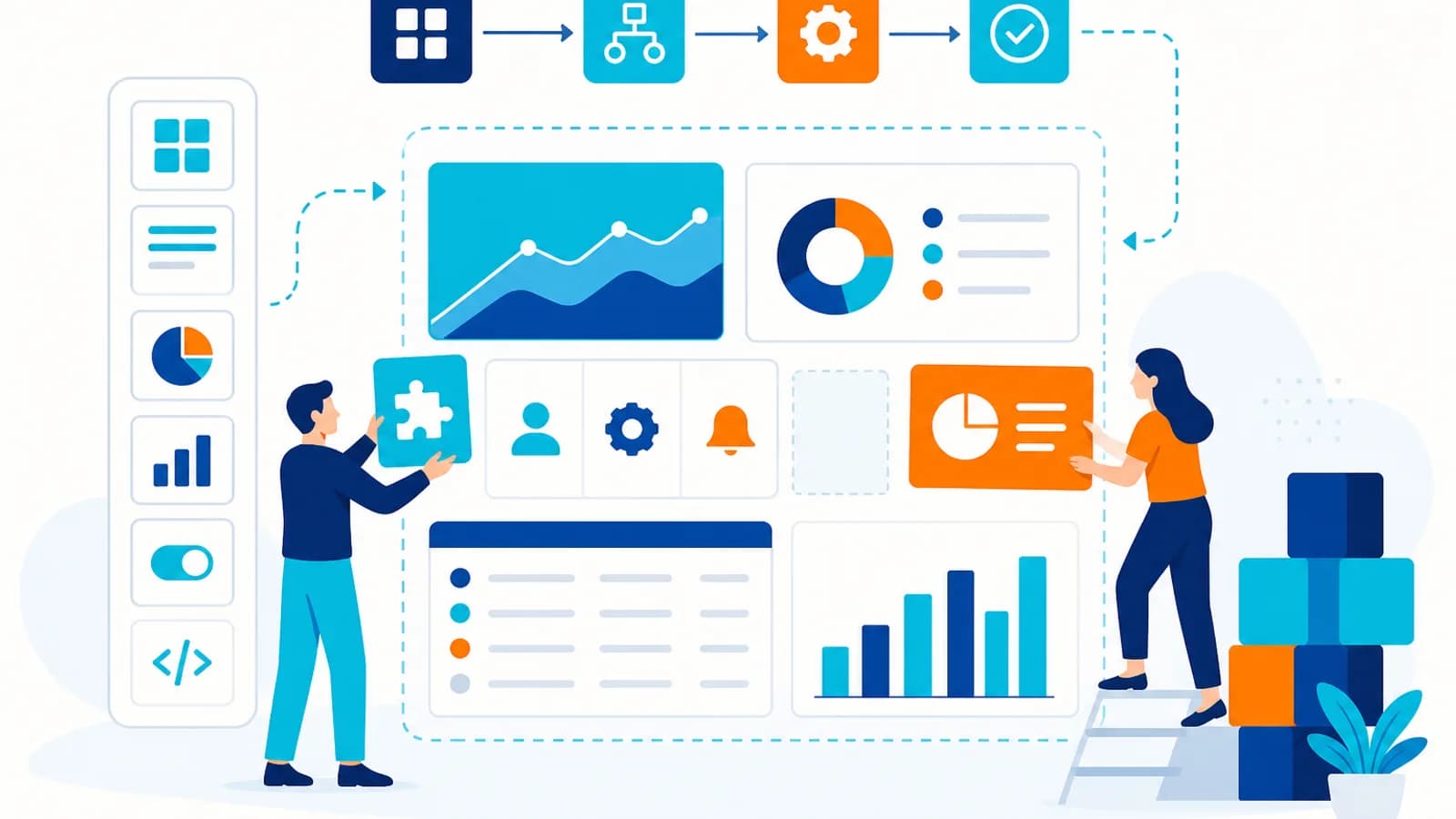
Custom applications are purpose-built for workflows, data models, or integrations that packaged products handle poorly. AIOBook handles discovery, UX, engineering, integrations, and maintenance so software aligns with the business.
The comparison below shows common operational friction before a connected solution — and the direction AIOBook solutions aim to achieve.
Before
After AIOBook solution
AIOBook starts from the business problem, then designs technology and integrations that support reliable execution.
Problem
The business process does not fit packaged software.
Approach
Validate requirements, prototype risky areas, and scope an MVP with clear ROI.
Solution
API-first backends, modern frontends, and secure integrations.
Integration
CRM, ERP, payments, messaging, and legacy systems.
Outcome
Maintainable software the organization can operate and extend.
Custom applications and automation replace repetitive steps by applying rules or AI-assisted logic, then updating connected systems.
Have a similar process in your organization?
Discuss Your Requirement →Custom applications often connect users, automation, and enterprise systems.
Where appropriate, AIOBook connects the solution with existing business systems through APIs and integrations.
AI can be added where interpretation creates value — with controls and review where risk is higher.
AI can be added where interpretation creates value — with controls and review where risk is higher.
Typical problem: Lead and student lifecycle spread across tools
Potential solution: CRM, portals, and workflow automation
Explore Education →Typical problem: Patient coordination and manual intake workflows
Potential solution: Portals, automation, and connected systems
Explore Healthcare →Typical problem: Inventory, orders, and customer data out of sync
Potential solution: E-commerce, CRM, and operational automation
Explore Retail →Typical problem: Lead follow-up and listing workflows
Potential solution: CRM and custom workflow tools
Explore Real Estate →Typical problem: Client delivery and billing disconnected from sales
Potential solution: CRM and custom applications
Explore Professional Services →Implementation moves from consultation through design, build, integration, testing, launch, and optimization.
Generic implementation
AIOBook approach
Construction
Challenge: Site progress, materials, and subcontractor updates were scattered across chats.
Solution: Project tracking platform with role-based dashboards and mobile field updates.
Outcome: Faster reporting cycles and clearer accountability across sites.
Logistics
Challenge: Dispatch and warehouse teams lacked real-time visibility into orders and slots.
Solution: Delivery app with slot management, substitutions, and driver routing integration.
Outcome: Higher on-time delivery rates and reduced manual dispatch coordination.
When process, data model, or integration needs cannot be solved economically through configuration alone.
Yes. Maintenance and improvements can be part of ongoing engagement.
Centralize leads, pipelines, and customer history.
Best for
Organizations with scattered customer data and sales workflows
Benefit
Better sales visibility and consistent follow-up
Explore CRM SolutionsUnify finance, inventory, HR, and operations on one platform.
Best for
Businesses running core operations across disconnected tools
Benefit
Unified business data and clearer operational visibility
Explore ERP SolutionsShip reliable mobile and web applications connected to your business systems.
Best for
Teams launching or modernizing customer or field apps
Benefit
Dependable applications with connected business data
Explore App DevelopmentTell us what you're trying to improve, automate or build. We can help you identify the right approach and next step.