
Guide search crawlers
Tell Google, Bing, and other bots which paths they may crawl — and which areas to skip.
Generate a robots.txt file for your website — choose a crawl policy, add a sitemap URL, then copy the file to your site root.
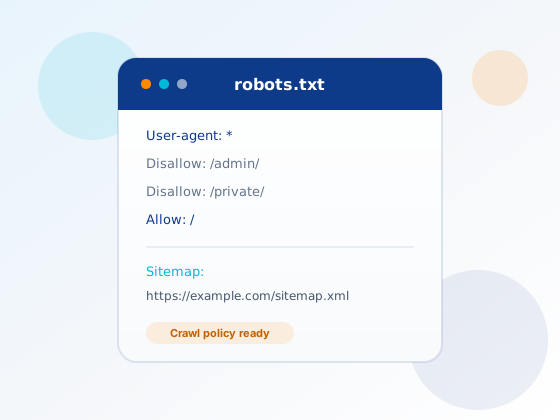
Enter your website URL, choose a crawl policy, and generate a ready-to-use robots.txt file — then copy it to your site root.
A robots.txt file sits at your site root and tells crawlers how to navigate your website — protecting private paths and helping search engines find what you want indexed.
Tell Google, Bing, and other bots which paths they may crawl — and which areas to skip.
Keep admin panels, carts, account pages, and staging folders out of the public crawl path.
Include a Sitemap line so crawlers can discover your important URLs faster and more reliably.
Block low-value or duplicate sections so crawlers spend more time on pages that matter for rankings.
Use a block-all policy on non-production sites so unfinished content does not appear in search.
A simple robots.txt file documents crawl rules for SEO, marketing, and engineering in one place.
AIOBook helps businesses with SEO-friendly websites, content systems, CRM, and AI automation — so traffic turns into outcomes.